
 image credit: unsplash
Every step you take has a moment when both feet are on the ground at once: the front heel has landed, and the back foot hasn't left yet. That overlap is called double support. It lasts a fraction of a second, but how long it lasts says a lot about how fast, how confident and how steady your walking is. Your iPhone measures it in the background, which is why it turns up in Apple Health.
What does double support mean in walking?
Walking researchers split each stride into a gait cycle: from one heel landing to the same heel landing again. For each leg, about 60% of the cycle is stance, with the foot on the ground, and about 40% is swing, with the foot in the air moving forward.
Because each foot's stance is longer than the other's swing, the two overlap twice in every cycle:
- Just after a heel lands, while the other foot is still pushing off behind you.
- Just before your toes leave the ground, as the other heel touches down in front.
Each overlap is roughly 10% of the cycle, so at an ordinary pace both feet are down for about 20% of the time. For the other 80%, you're balanced on one foot while the other swings through.
Double support is also what makes walking walking. Running has none: instead of a moment with both feet down, it has a moment with neither, called the flight phase. As you walk faster, double support gets shorter, until breaking into a run removes it altogether.
What is a normal double support time?
At a comfortable pace, a healthy adult spends about 20% of the gait cycle on both feet. It isn't a fixed number, though:
- Walking slowly stretches it. The slower the pace, the longer both feet stay down, both in seconds and as a share of each step.
- Age raises it. Studies of people in their seventies and older have recorded averages of roughly a quarter to a third of the gait cycle.
- Turning raises it too. In one study of older adults, double support averaged about 35% on straight walking and nearly 40% while turning.
Apple Health shows double support as a percentage, labelled Double Support Time. Readings for most adults fall somewhere between about 20% and 40%, depending on age and how fast they walk. Your own usual range matters more than anyone else's, so compare this week with the last few months rather than with a friend.
Why does double support time go up?
Keeping both feet down is a safety move. Two feet give you a wider, steadier base, so your body leans on it whenever balance feels less sure. You'll see double support rise with:
- A slower pace, for any reason: a stroll, a crowd, a child's hand.
- Tricky ground, such as ice, wet leaves, gravel, a dark path or a steep slope.
- Tiredness, at the end of a long day or a long walk.
- Pain or injury, in a foot, ankle, knee, hip or back, especially while it heals or after surgery.
- Weaker legs or poorer balance, which often come with age or time off your feet.
- New or unsteady shoes, or carrying something heavy or awkward.
- Fear of falling, which Apple's research links to longer double support on its own, whatever the cause.
Most of these are short-lived and harmless. A higher reading the week you walked on snow, or while a sprained ankle healed, is your body doing its job.
Is a high double support time a sign of fall risk?
It can be one sign among several. In a study of 597 adults aged 70 and over, followed for a few years, those who spent longer in double support were more likely to fall, along with those who walked more slowly. Apple's own research makes the same link: more time on both feet goes with lower stability and a greater fear of falling.
Two things to keep in mind. First, double support is a marker, not a cause: it rises because something has made walking feel less steady, and fixing that something is what helps. Second, a single reading means little. What's worth noticing is a rise that lasts for weeks without an obvious reason such as weather, injury or a change of shoes.
How does your iPhone measure double support?
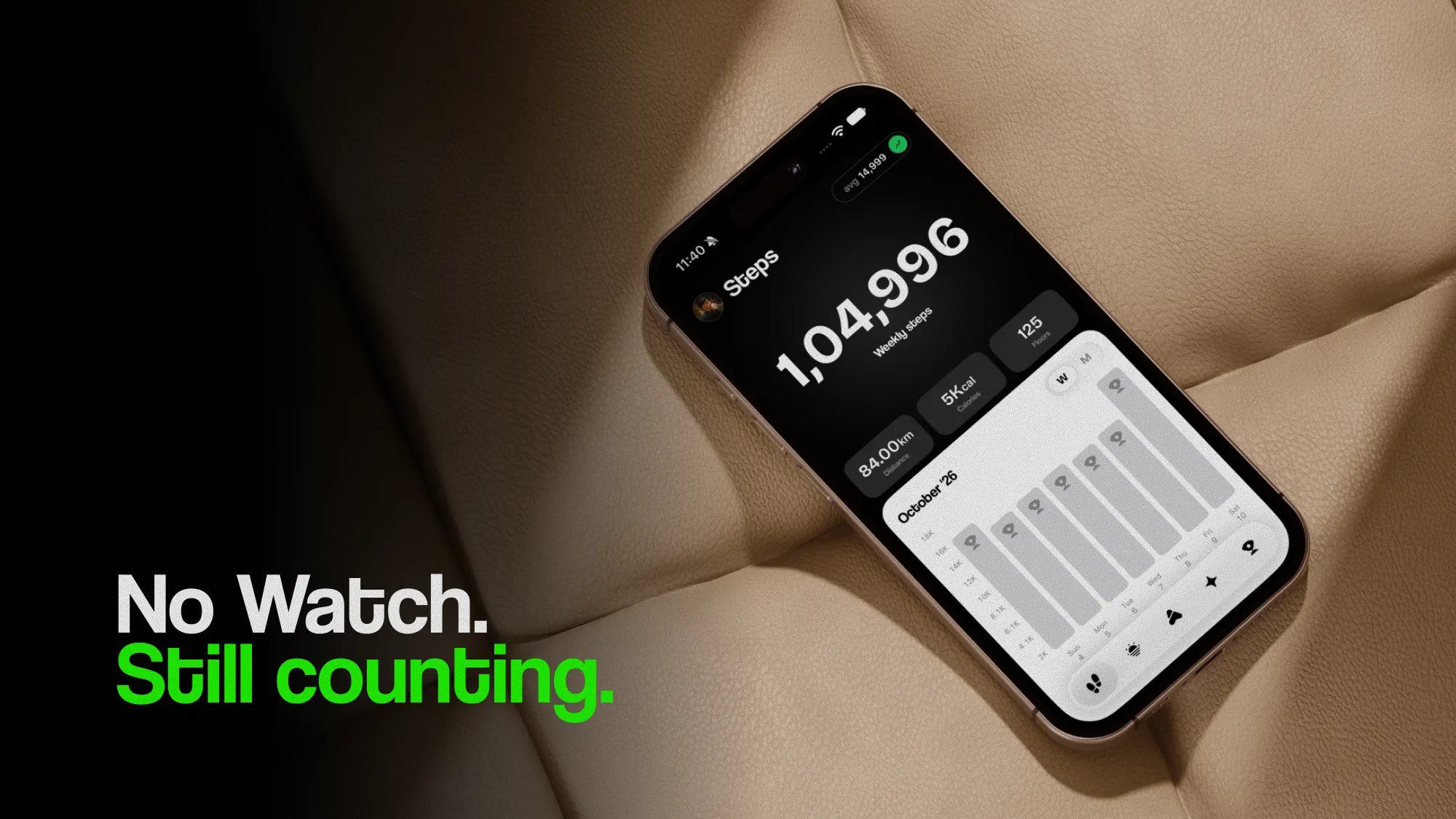
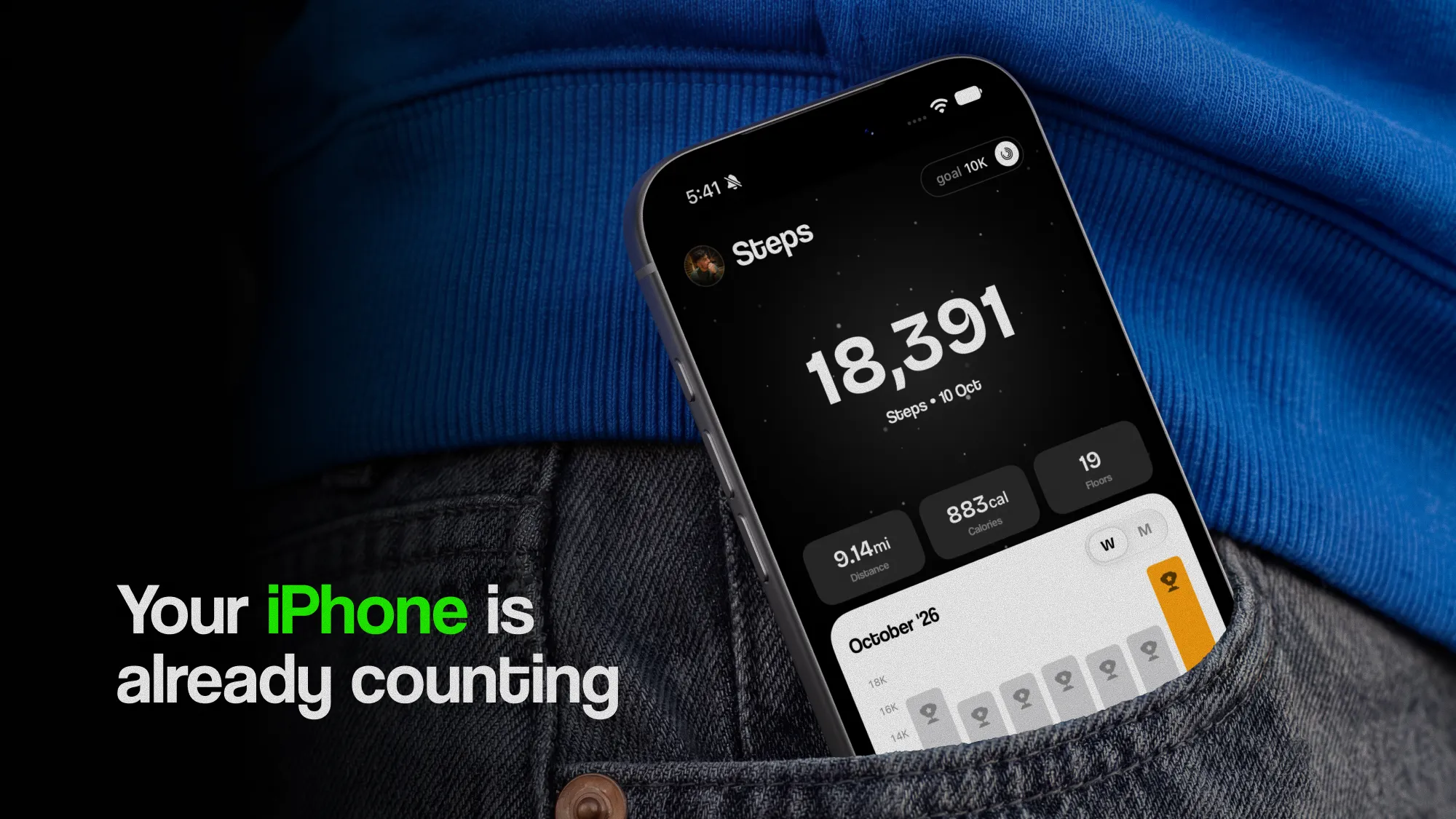
Since iOS 14, iPhone 8 and later estimate double support time from their motion sensors while you walk on flat ground, with the phone in a trouser pocket or held near your waist. It happens in the background, and no Apple Watch is needed: the watch doesn't measure it at all. You'll find it in the Health app under Browse, then Mobility, beside walking speed, step length and walking asymmetry. More on what your phone records on its own is in counting steps on iPhone.
Apple published a white paper on how these mobility metrics were developed and checked against lab equipment. An independent 2023 study found the iPhone measured walking speed and step length well, but read double support a little low compared with a gait lab. So treat the trend as more reliable than the exact value, and keep the phone in the same pocket where you can.
Double support is also one of the measurements behind Walking Steadiness, the iPhone's estimate of your risk of falling over the next year, alongside walking speed, step length and asymmetry.
Can you lower your double support time?
You don't need to chase a lower number. Walking slowly on ice with both feet down longer is the right thing to do. But if your double support has crept up and walking feels less steady, a few things help the underlying cause:
- Keep walking regularly. Walking is itself practice at balancing on one leg, thousands of times a day. A walking plan for beginners builds up without overdoing it.
- Add some brisk walking once steady walks feel easy. Pace and double support move together, and Pace shows yours over time. Never push faster than feels safe.
- Train strength and balance. The NHS recommends strength and balance exercises, such as standing on one leg near a counter or rising from a chair without your hands, as one of the best ways to prevent falls.
- Check your shoes. A firm, flat sole that grips usually beats a soft or worn-out one.
- Deal with pain. A sore knee or foot that has you favouring one side shows up here and in walking asymmetry. A physiotherapist can help.
When should you talk to a doctor?
Book a check with your doctor or a physiotherapist if:
- your double support time has risen for weeks and you can't think why;
- you feel less steady, or have started holding on to rails and furniture;
- you've had a fall, or a near-miss, recently;
- your iPhone's Walking Steadiness has dropped to Low or Very Low.
If you fall and hurt yourself, can't get up, or hit your head, get help straight away.
Double support in StepUp
StepUp's Evenness metric reads double support from Apple Health and shows your weekly average beside your walking asymmetry, so a slow drift up or down is easy to spot. It needs only your iPhone. Walking metrics, explained covers Evenness and the other eight.
The short version
- Double support is the part of each stride when both feet are on the ground.
- At a normal pace it's about 20% of the gait cycle, and it rises with slower walking and age.
- It goes up when walking feels less steady: tricky ground, tiredness, pain, weaker balance.
- Your iPhone measures it in your pocket. Watch the trend, not one day's number.
- A lasting rise with no clear cause, or feeling less steady, is worth a doctor's check.
Questions
What is a normal double support percentage?
At a comfortable pace, about 20% of the gait cycle for a healthy adult. On iPhone, most adults’ readings fall between about 20 and 40%, higher when you walk slowly and as you get older. Compare it with your own usual range.
Is a higher double support time bad?
Not on its own. It rises on ice, when you’re tired or when you walk slowly, and that’s normal. A rise that lasts for weeks without a reason, or feeling less steady, is worth a check with your doctor.
Why is my double support time high on iPhone?
Common reasons are walking slowly, uneven or slippery ground, tiredness, pain or injury, new shoes or carrying a load. The phone reads best snug in a trouser pocket or near your waist; a loose pocket or bag can skew it.
Does running have a double support phase?
No. Running has a flight phase instead, when neither foot is on the ground. Double support shrinks as you walk faster and disappears when you break into a run.
Do I need an Apple Watch to measure double support?
No. iPhone 8 and later, on iOS 14 or newer, measure it while the phone is in your pocket or near your waist. Apple Watch doesn’t measure double support.
Sources
- AAPM&R KnowledgeNow: Biomechanics of normal gait
- Apple (2022), Measuring walking quality through iPhone mobility metrics
- Verghese J, Holtzer R, Lipton RB, Wang C. Quantitative gait markers and incident fall risk in older adults. J Gerontol A Biol Sci Med Sci, 2009
- Gulley E, Ayers E, Verghese J. A comparison of turn and straight walking phases as predictors of incident falls. Gait & Posture, 2020
- Kaylor et al. (2023), The accuracy of the Apple Health application mobility data during overground and treadmill walking
- NHS: Falls, prevention
Written by Dheeraj Kumar Sharma, who makes StepUp. How the guides are written.